
Bombay

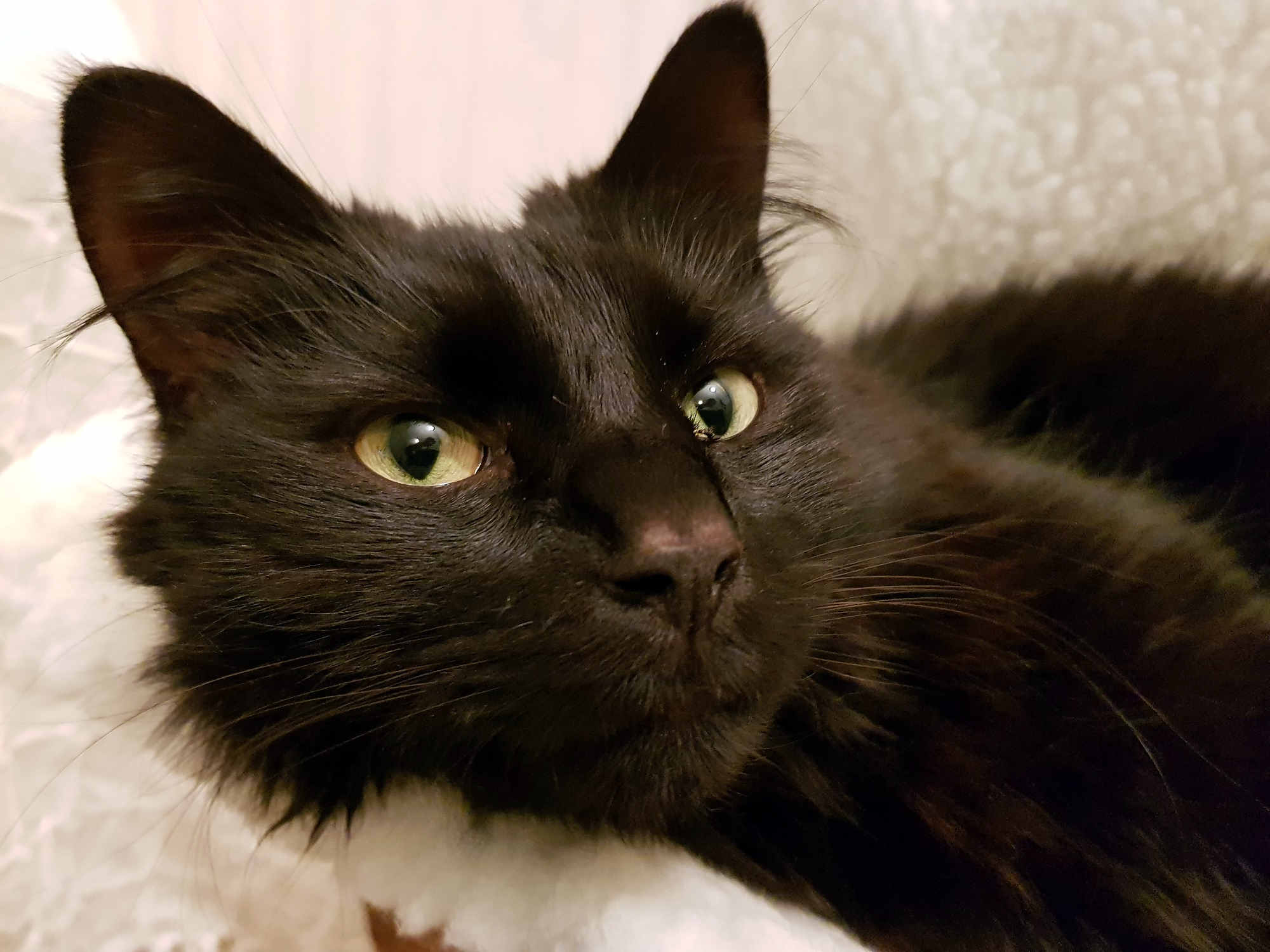
The Bombay is two distinct breeds of cat (please see below). These are muscular yet agile cats with a black coat. The heads of Bombay cats are rounded and wide with a short tapered muzzle. The eyes, which are of golden or copper color, are rounded and set wide, and their ears are broad, slightly rounded and medium sized and, like the eyes, set wide.

Bombay

American Bombay

The Bombay has a coat that is short, satiny and tight to the body. Bombay cats do not require grooming, although petting the cat will keep their coat shiny and will also remove dead hair. A rubber brush can help when the cat sheds larger amounts of fur (uncommon). If the cat is fed a balanced diet, the coat will shine and the cat’s naturally energetic personality will become evident.

Personality

Bombay cats crave human affection like most felines. The Bombay appreciates affection and purrs loudly. Bombay cats are quiet and watchful and prefer living indoors. They can be affected by loud intrusive noises as loud noises make the Bombay nervous. A symptom of this nervousness is that they lose fur from their belly and near their tail. One remedy for this is to simply keep the cat indoors or away from loud noises and make sure they have somewhere to hide. Some convenient locations where a cat can hide are behind chairs, cupboards and almost anywhere that it is difficult for a predator to gain entry, including spaces behind TVs, inside cabinets and underneath small tables.

While Bombay cats will tolerate other breeds of cat, they may tend to dominate other cats. Bombay cats seem to get along well with dogs. Dogs are pack animals and have a pecking order which the Bombay will take advantage of.

Like most cats that have been raised properly, Bombay cats are smart, agile and inquisitive. They will often seek out human interaction. Bombays will investigate packages and will commonly chew through bags and containers to get at food. This can lead to problems if they eat chicken bones which can injure the cat’s throat.

Bombay cats are by nature lap cats. They seek heat and will jump up on their owner’s backs and rest around their neck for comfort and reassurance.These cats are head-bumpers and nose-rubbers, Some can be very “talkative” (meow loudly) and have distinct “voices”. The Bombay will often “fetch”, and takes on other dog-like characteristics. These cats love nothing more than to be held and fussed over. Sensitive, reserved and intelligent, the Bombay is suited to life in a quiet home, where it is affectionate to the whole family. Both males and females are excellent pets.

Bombay cats enjoy being around anyone, but may select someone specific to pay the most attention to. They are wonderful for families with children but may be at first annoyed with a new cat in the house.

Bombay cats are rumoured to have sometimes unusual diets as lap cats. They may actually eat not just sour cream, but baked cookies or beans if the situation arises. Like many other species of domestic cats, they are rather sneaky and creative at the kitchen table.

British Bombay
The British Bombay cat is the name given to black cats of the Asian group. It is a cat of Burmese type with a black coat, toes, nose, and copper to greenish eyes.

American Bombay
The American breed called Bombay was created in 1958 in Louisville, Kentucky, when Nikki Horner of Shawnee Cattery deliberately bred an American Shorthair with a Burmese for the purpose of creating a domesticated cat that resembled a wild panther (also known as baby panther). The offspring of this breeding did indeed resemble the black leopard of India. The name came from the Indian city of Bombay (now Mumbai). Horner called her creation the “patent leather kid with the new penny eyes.”
Sphynx

The Sphynx (also known as the Canadian Hairless) is one of the newer cat breeds. It is reported that the first Sphynx was born in Canada in 1966, in Roncesvalles, Toronto when a hairless kitten named Prune was born. The kitten was mated with its mother (a process known as backcrossing), which produced one more naked kitten. The lack of hair on the Sphynx is caused by a genetic imbalance and occurs about once every fifteen years.

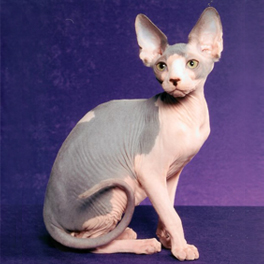
Despite the Sphynx appearing to be a hairless cat it is in fact not truly hairless. The skin will have the texture of chamois leather or a ripe peach. This covering is a very soft, fine down, which is almost imperceptible to both the eye.

Sphynx

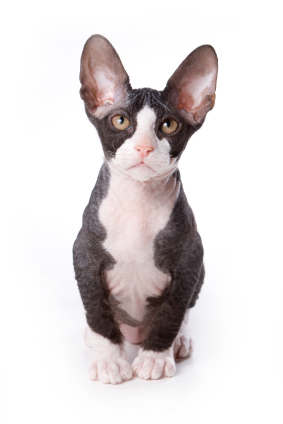
Sphynx cat with typically large ears.

Lack of a thick coat makes the cat quite warm to the touch. Hair in the form of Whiskers and eyebrows may be present or may in some extreme cases be totally absent. It is said that the skin of this feline is the color their fur would have been had it been present, and all the usual cat marking patterns (solid, point, van, tabby, tortie, etc) may be found in Sphynx too. This is a very unusual trait.

The personality of the Sphynx is generally warm and friendly, highly intelligent, inquisitive and extroverted. They are also very affectionate and social animals. If kept as a pet the Sphynx should always have the company of others (be they other Sphynx or humans) so that they have companionship throughout each and every day. It is said to be cruel to keep a sphynx isolated for long periods.

Many people with typical allergies to cats with full fur coats find that they tolerate the Sphynx breed well. Because Sphynx don’t leave hair all over the house this is thought to make them an easier cat to keep. This is not strictly so! Their lack of hair results in increased body oils so regular bathing is often necessary, which is an inconvenience most cat owners dont have to deal with. Also the Sphynx will be going outdoors as often as your ‘common’ domestic cat (if at all) Care should be taken to limit the Sphynx cat’s exposure to outdoor sunlight as they can develop a sunburn, similar to that caused in humans. In general, Sphynx cats should never be allowed outdoors unattended, as they have limited means to conserve body heat in colder temperatures, and their curious nature can take them into dangerous places or situations.

A semi-coated Sphynx showing skin markings.

The Sphynx breed is known for a sturdy, heavy body a wedge-shaped head and an alert friendly temperament. Although hairless cats have been reported throughout history (hairless cats seem to appear naturally about every 15 years or so), and breeders in Canada have been working on the Sphynx breed since the early 1960s, the current American and European Sphynx breed is descended from two lines of natural mutations:

Other hairless breeds might have different body shapes or temperaments than those described above. There are, for example, new hairless breeds, including the Don Sphynx and the Peterbald from Russia, which arose from their own spontaneous mutations. The standard for the Sphynx differs between cat associations such as TICA, FIFE and CFA.

Sphynx hairlessness is produced by a ‘strain’ of the same gene that produces the Cornish Rex, which has only one of the usual two fur coats. The Sphynx strain (or allele) is incompletely dominant over the Devon allele; both are recessive (or revert) to the wild type. Sphynx were at one time crossbred with Devon Rex in an attempt to strengthen this gene, but unfortunately this led to serious dental or nervous-system problems and is now forbidden in most breed standards associations. A genetic heart defect was also introduced by the Devon Rex breed. The only allowable out-cross breeds in the CFA are now the American Short-hair and Domestic Short-hair. Other associations may vary. In Europe mainly Devon Rex has been used for out-crosses.

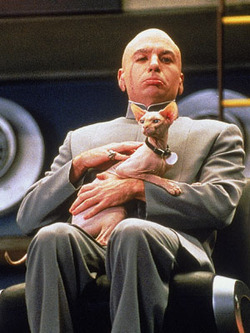
One of many ‘Dr. Evil’ cats, The Sphynx ‘Mr Bigglesworth’