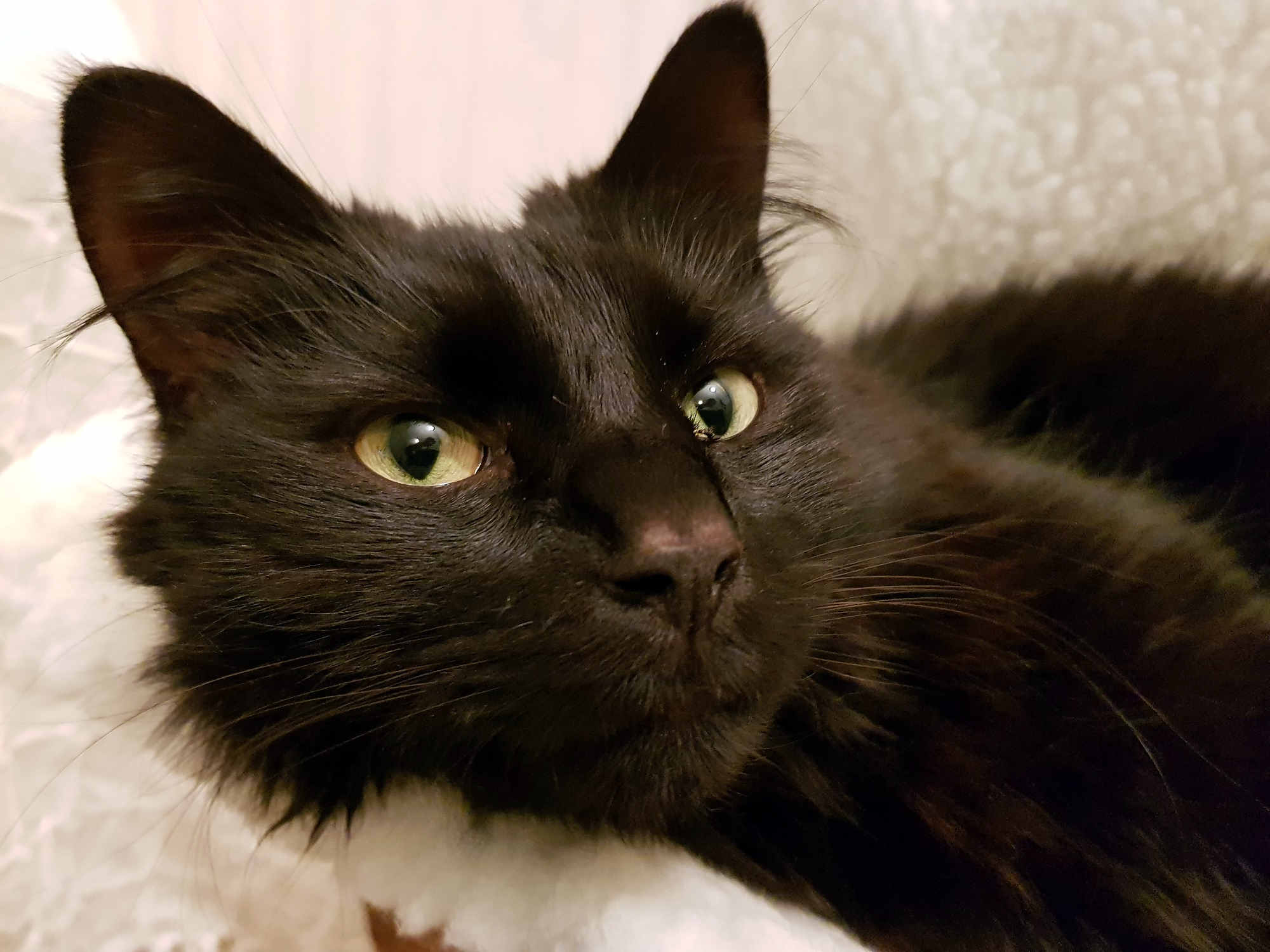

‘Sybil’ replaces ‘Humphrey’ at No 10.

Well this is about as political as we’re going to get round here…so here goes…

Humphrey the Downing Street cat was retired in 1997, after years of living in the Cabinet Office and Downing Street areas. His departure came shortly after Tony Blair’s arrival as prime minister. A bird table was then put into No 10’s garden.

Sybil
Photograph: Alisdair Macdonald/Rex

Now, slinking down the corridors of power comes ‘Sybil’. Named after Basil Fawlty’s wife in the classic 1970s sitcom, Sybil lives in the flat above No 10 with the chancellor during the week. Gordon Brown and his wife occupy the bigger flat at Number 11, which is the traditional home of the chancellor.

Sybil, officially know as Chief Mouser to the Cabinet Office

‘Sybil’ is famed for her nocturnal ramblings and can make the dourest of Labour politicians go weak at the knees. The new occupant at No 10 belongs to Alastair Darling.

Sybil, on her way to a summit meeting

Here’s an update on the history of the Offical Chief Mouser to the Cabinet Office

Name Began tenure Ended tenure Prime Minister(s)
Treasury Bill 1924 1924 Ramsay MacDonald
Peter 1929 1946 Stanley Baldwin, Ramsay MacDonald, Neville Chamberlain, Winston Churchill, Clement Attlee
Munich Mouser 1940 1943 Neville Chamberlain, Winston Churchill
Nelson 1940 1940 Winston Churchill
Peter 1941 1946 Winston Churchill, Clement Attlee
Peter II 1946 1946 Clement Attlee
Peter III 1946 1964 Clement Attlee, Winston Churchill, Anthony Eden, Harold Macmillan, Alec Douglas-Home
Peta 1964 1976 Alec Douglas-Home, Harold Wilson, Edward Heath
Wilberforce 1973 1988 Edward Heath, Harold Wilson, Jim Callaghan, Margaret Thatcher
Humphrey 1989 1997 Margaret Thatcher, John Major, Tony Blair
Sybil 2007 2009 Gordon Brown
Freya 2012 2014 David Cameron
Larry 2011 current David Cameron, Theresa May

“Moggy” – origin of the word

Moggy or moggie (plural moggies) is a British affectionate term for a domestic cat, but is also used as alternative name for a mongrel or mixed-breed cat whose ancestry and pedigree are unknown or only partially known. Because of this mixed ancestry and free-breeding, a moggy can either be very healthy, or, if from an inbred feral colony, genetically unsound and sickly. However, as feral colonies are often left without any form of human intervention and veterinary attention, the sickly generally do not live past kittenhood, leaving the colony as a whole healthy.

Etymology
The origin of the word moggy is not a corruption of the word ‘mongrel’, as many believe. It was first recorded in 1911, and was possibly derived from maggie, margie or mog, all short forms of the female name Margaret. It is thought this was first used to describe an ungainly lumbering old cow, and it may even have been a minor rural English name for any cow; since ‘moggy’ was used in several 1800s English dialects as an ‘affectionate name’ for a cow. As rural people flocked to the cities during the latter part of the Industrial Revolution, it seems likely that the cow moggy became maggie, applied as a term of abuse for a dishevelled old woman or ‘woman of the street’.

The origin is obviously confused, but as the early 20th century streets of London became filled with very many unhealthy looking stray cats, it would have been natural to apply the term moggy to describe these unfortunate creatures.

In parts of Lancashire, England the word ‘moggy’ means mouse not cat. A cat was known as ‘the moggy catcher’. It has been suggested that this could be the etymology of the word moggy meaning ‘cat’ – over time the catcher part was dropped from ‘the moggy catcher’ and so moggy now means both ‘mouse’ and ‘cat’.

Thanks Wikipedia, the free encyclopedia