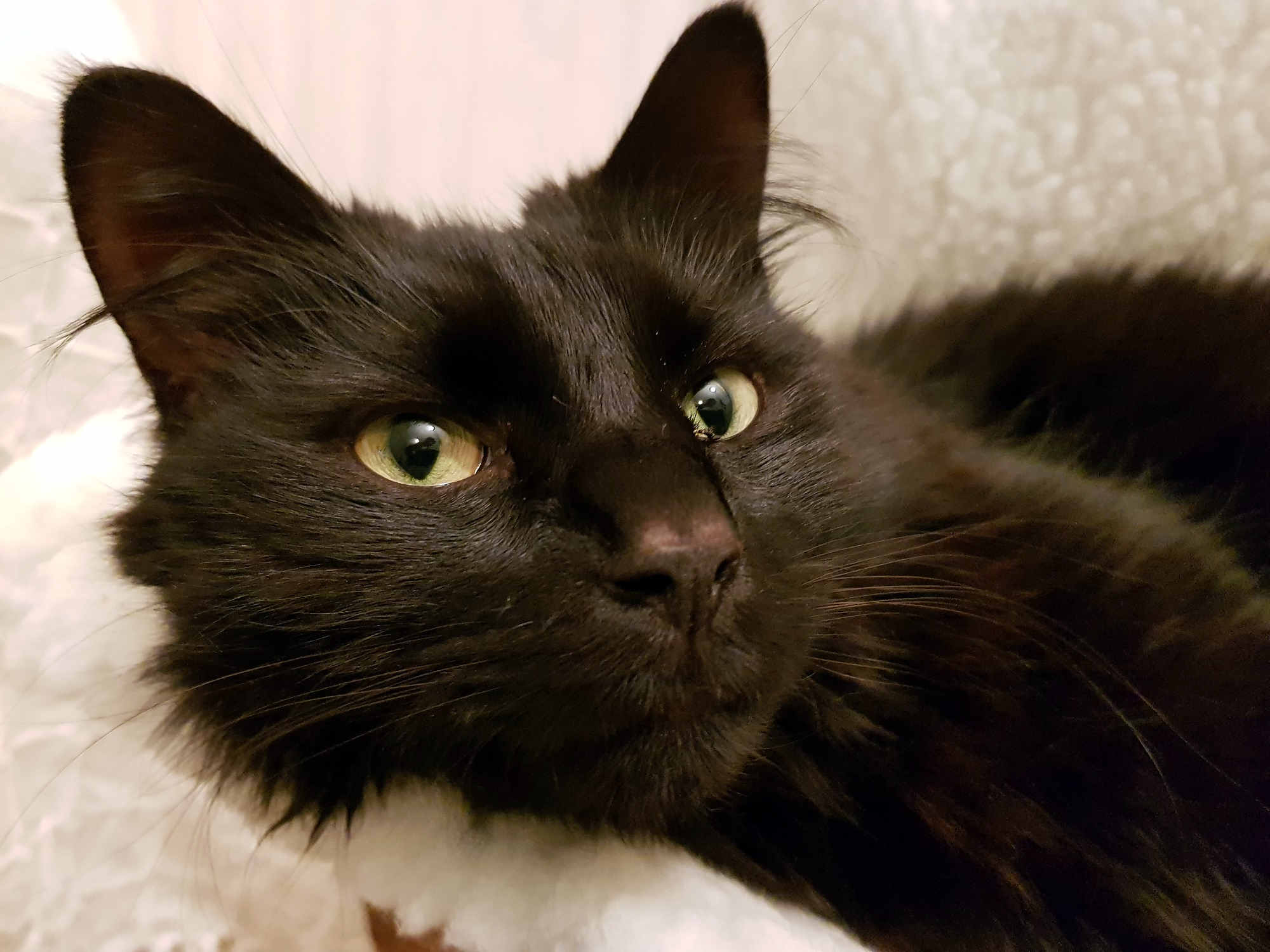

Havana Brown

The Havana Brown is similar to the oriental shorthair and is a full color cat, also known as a non-blue eyed Siamese. This cat breed is also known as a Swiss Mountain cat and has been known and shown in England since the late 1890s.

During World War I and World War II, the breeding programs of pedigreed cats suffered. It was not until the post World War II era that time cat fanciers renewed their breeding efforts. In the early 1950s a group of English cat fanciers began working together to restore the breed.

havana brown cat

The Havana Brown or ‘Swiss Mountain Cat’
Photograph: Sally Anne Thompson

The ladies credited with this effort include Mrs. Armitage Hargreaves of Laurentide Cattery, Mrs. Munroe-Smith of Elmtower Cattery, the Baroness Von Ullmann of Roofspringer Cattery, Mrs. Elsie Fisher of Praha Cattery, and Mrs. Judd of Crossways Cattery. These breeders produced a chestnut (chocolate) colored kitten through mating a black shorthair and a chocolate point Siamese.

The Havana Brown is a moderately sized, muscular short-haired cat with a body of average length. For showing the coat color must be brown, typically reddish-brown, with no tabby markings at all. Whiskers should also be brown and the eye color should be green. The head should be slightly longer than wide and the nose should have a distinct stop at the eyes. Males tend to be larger than females and are average in weight compared with other breeds.

The Havana Brown is an intelligent cat that often uses its paws both to examine objects and to communicate with its owners. The most likely explanation of the breed’s name is that its coat color is very similar to that of Havana cigars.

The breed has been recognized for championship competition in both the US and Britain since the late 1950s. It is considered an endangered breed, since the breeding pool is very small. In the late 1990s, there were only 12 CFA-registered Havana Brown catteries and under 130 unaltered cats.

Ragamuffin

The Ragamuffin is a long-haired domestic cat similar in appearance to the Ragdoll. Ragamuffins are fairly large cats, queens weigh between 4.54 and 6.80 kg (10 to 15 lb) and toms weigh between 6.80 and 9.07 kg (15 to 20 lb).

Ragamuffins are large, muscular, heavy cats that do not reach full maturity until approximately four years old. The look of the body is rectangular, with broad chest and powerful shoulders supporting a short neck. The head is a broad modified wedge with a rounded forehead and obvious nose dip. There is a puffiness to the whisker pad and cheeks are full. Large, walnut shaped eyes give a sweet appearance. The Ragamuffin has a long, dense and silky coat, like that of a heavily furred rabbit, and the hair grows longer around the face and neck (a ruff), increases in length toward the stomach, with a wispy frill on the hind legs. Every possible color and pattern is allowable.

raga muffin cat

ragamuffin – kept indoors for their own protection.

Difference from a Ragdoll: The Ragamuffin has a shorter, scooped nose, while the Ragdoll has a gentle curve with the final segment straight. Rather than having a flat plane between the ears, the skull of the Ragamuffin is gently rounded. The Ragamuffin has a bit more chubby-looking face, and slightly tipped forward ears. Ragamuffin breeders also emphasize a sweet expression and walnut shaped eyes rather than the oval eyes seen in the Ragdolls. The Ragamuffin is allowed to outcross with certain other breeds every fifth generation which is important for maintaining the excellent health of the breed.

History

The Ragamuffin is one of the newest breeds of domestic cat. It was created in 1994. The exact development of this breed is cloudy and will likely remain a mystery. It was accepted in the Cat Fanciers’ Association (CFA) miscellaneous class in 2003.

Mrs. Ann Baker

Many believe the Ragamuffin resulted from accidental breeding. Some accounts suggested Mrs. Baker started the breed in the 1960s with a Ragdoll cat named Josephine and a regular, non-pedigree cat. The kittens turned out so cute and so special that Mrs. Baker wanted to preserve their special qualities by breeding Josephine’s offspring and by being the only person to breed and sell Ragamuffins. Mrs. Baker’s restrictions created friction between her and other breeders who, ultimately, branched off on their own and pushed for the new registry with the CFA.

Color forms

This breed has several of the color formations that are present on Ragdolls, but also has a variety of different colors. Some colors include: all variations of pointed color, including Tortie Point, Red Point, and Lynx Point.

Personality

The only extreme allowed in this breed is the very docile nature. The Ragamuffin loves people and is very cuddly and affectionate, with a tendency to go limp when held. While not terribly athletic, they love playing and climbing scratching posts and some will even fetch toys. They greet family members at the door and will follow their people around the house. Though some have been known to bite when not given the desired attention.

Because of their gentle nature, Ragamuffins are generally kept indoors for their own protection.