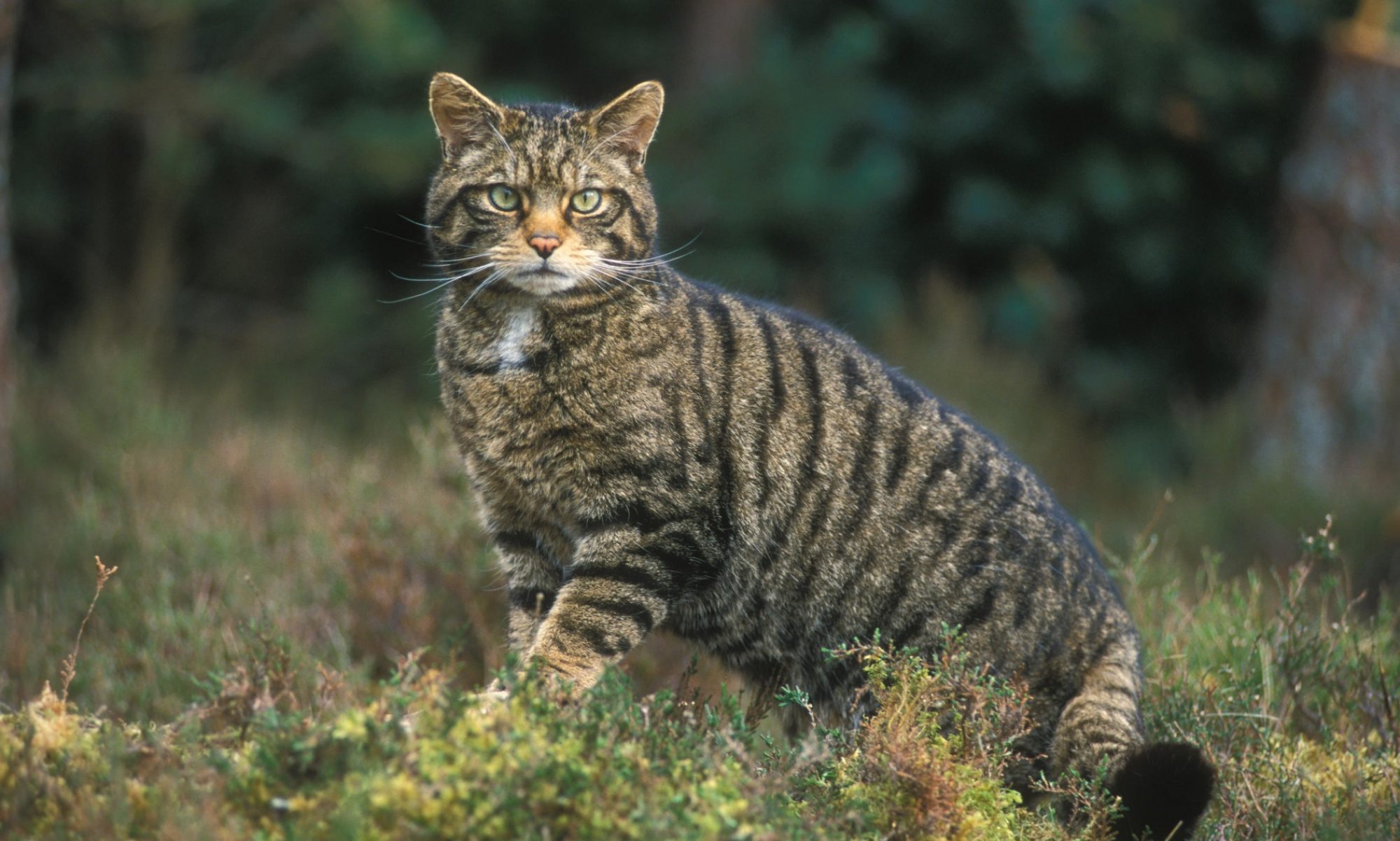

Category: Leopard

Leopard Rescued from Gujarat Well

by Ed Email

Forest wardens in India's Gujarat state have rescued a three-year old leopard which had fallen into an open well. The leopard is the second of its kind to be rescued in the area this week, highlighting the growing problem of creatures loosing their habitat and having to stray into populated areas for food.
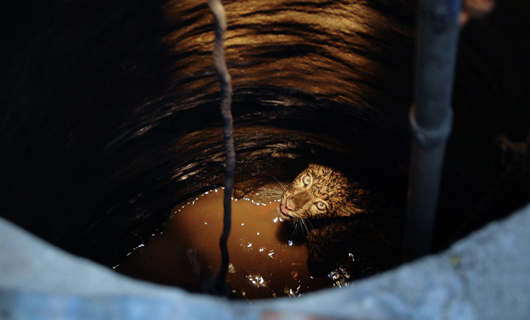
A young leopard peers towards a rescuers torch beam

Photograph: Biju Boro/AFP/Getty

The distressed leopard was finally winched to safety after many hours of incarceration and trauma. The animal was tranquilised using a dart after its struggles against a noose round its belly were thought to be harming the animal.

Eventually the three-year-old animal was lifted from the water and hauled onto a wooden frame by a team of eight wardens in the village of Aambaliya.

It is said that the Leopard is becoming India's Urban Fox as incidents such as this are growing in frequency as shrinking natural habitats forces more of these big cats to venture into human territory. They approach settlements where they are tempted to prey on domestic livestock including dogs, pigs and goats, and of course they will always be in need of a drink of water.
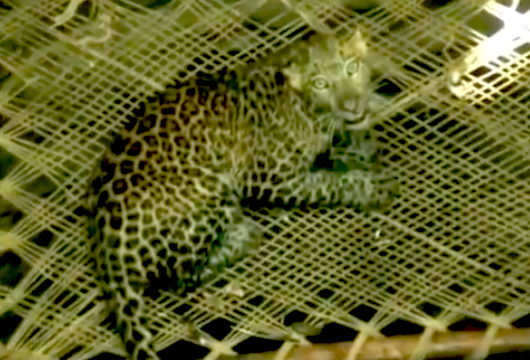
Leopard in the net. On his way to Freedom (oh sorry, the local zoo)
Photographs: Reuters

Leopards were once common across all of southern Asia but have been recently classified (since 2008) as 'near threatened' by International Union for Conservation of Nature. In May 2010, the Wildlife Protection Society of India estimated that at least 3,189 leopards were killed in the country since 1994.
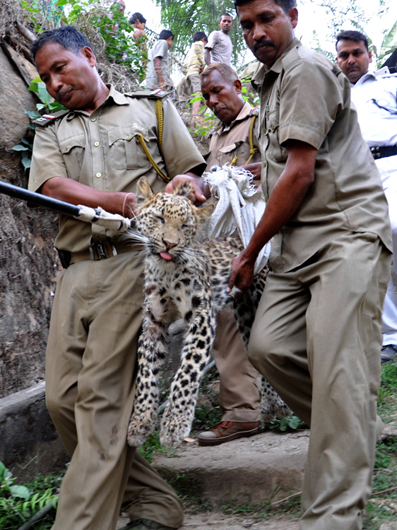
The animal is sedated and taken to the nearby zoo. Poor Thing!
Photographs: Photo: Biju Boro/AFP/Getty

Norman and I are pleased the animal was freed from his ordeal but feel that incarcerating him in the local zoo (and not setting him free) was a little uncalled for. However we have no knowledge of affairs in this region and so hope the leopard is given a large home in which to live.

African Leopard

by Ed Email

Cat of the Month ~ May 2011

A female African Leopard up a tree
Wild female Leopard

Photograph: Patrick Meier

The story of how this particular female Leopard came to be up a tree is recounted by Patrick, the photographer:

"This photo was taken in a place called Xakanaxa, in the Moremi Game Reserve, Northern Botswana. We followed this female leopard for about 20 minutes. She went up and down some tall trees, getting closer and closer to a herd of impala. Eventually, when she started to stalk, she vanished from our sight in a single leap."

The African Leopard (Panthera pardus pardus) is a leopard subspecies occurring across most of Sub-Saharan Africa. The International Union for Conservation of Nature (IUCN) classified leopards as Near Threatened in 2009, stating that they may soon qualify for the Vulnerable status due to habitat loss and fragmentation. They are becoming increasingly rare outside protected areas and the population is decreasing gradually. The most secretive and elusive of the large carnivores, Leopards are solitary creatures and predominately nocturnal.

Leopards are known for their ability in climbing (and said to be the strongest climber of the large cats). By climbing, the Leopard can use this vantage point to gain a better view of possible prey in an area. These cats have been observed dragging their kills up trees and hanging them there.
They are powerful runners, reaching speeds of up to 36 mph in the chase. They are also capable swimmers (although not as strong as some other big cats, such as the tiger). They are very agile, and can leap over 6 metres (20 ft) along the ground, and jump up to 3 metres (10 ft) vertically.

Leopards are versatile, opportunistic hunters, and have a very broad diet. They feed on a greater diversity of prey than other members of the Panthera species, and will eat anything from dung beetles to male giant elands, up to 900 kilos in weight. Their diet consists mostly of ungulates (hooved animals) and monkeys, but they also eat rodents, reptiles, amphibians, insects, birds, and fish. In Africa, mid-sized antelopes provide a majority of their prey, especially impala and Thomson's gazelles.

They have been heard producing a number of vocalizations, including grunts, roars, growls, meows, and "sawing" sounds. To hear some of these recorded sounds you may want to try this link.

Sources : Personal account by Patrick Meier, Wikipedia.org and other Big Cat websites.